Building the systems our team needed to deliver user-centered work at scale
-
My Role: DesignOps and UX Lead
-
Project Duration: 2 years (+9 month contract extension)
-
Scope: Four agency websites – FSA, RMA, NRCS, and FPAC BC
Background
In 2022, Aleut Information Technology was awarded the USDA Farm Production and Conservation (FPAC) Web Modernization Program, a multi-year initiative to redesign, migrate, and modernize several public-facing agency websites in 2 years.
The work also included improving information architecture, meeting federal accessibility standards, applying user-centered design practices, and aligning the digital experiences of FSA, RMA, NRCS, and the FPAC Business Center sites.
My Role
As the UX lead for the program, I served as both the strategic and operational anchor for the team and the primary UX voice to stakeholders. I set the direction for research, design, and content strategy while creating the DesignOps foundation that kept the work consistent and on schedule.
Key responsibilities included:
- Managing and coaching the UX team
- Leading research and UX planning across agencies
- Overseeing workflows, review cycles, and DesignOps processes
- Acting as the main UX representative in stakeholder and cross-functional meetings
- Guiding analytics strategy and data-informed decision making
- Coordinating closely with development and product leadership to keep the program aligned
Challenge
The FPAC Web Modernization Program required a strong human-centered approach grounded in user research, iterative design, and close collaboration across agencies. But, this was Aleut’s first human-centered design program. There were no existing processes, standards, or workflows in place to support that way of working. We needed to create them.
Since we were starting from scratch we needed to:
- Staff a team that had the necessary skills do deliver this work
- Make sure the team had the tools and technology to get work done
- Set communications standards to support a fully remote team who spanned both coasts
- Create spaces and standards for document management and information sharing
- Establish clear workflows for research, content strategy, and design
- Define repeatable practices and process to support quality and consistency
- Coordinate collaboration across UX, developers, and agency stakeholders
- Build a system that could scale across multiple agency websites
Solution
Building the Right Team
Understanding the Program Requirements
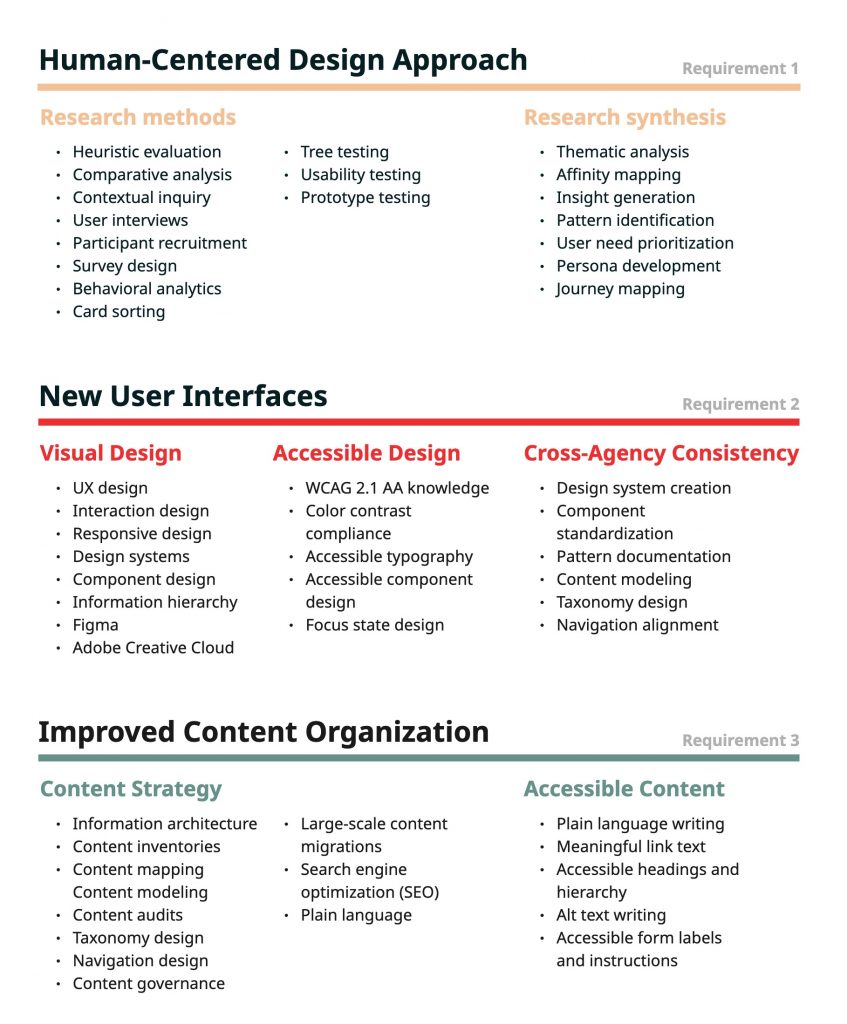
I began by reviewing the program’s contractual requirements to understand the skills and roles needed to deliver the new websites successfully.
Mapping Requirements to Skills
Considering the human-centered design methodology, the large-scale content migrations, and the goal of modernizing FPAC’s enterprise visual identity, I identified the core skills and roles required to support this work.
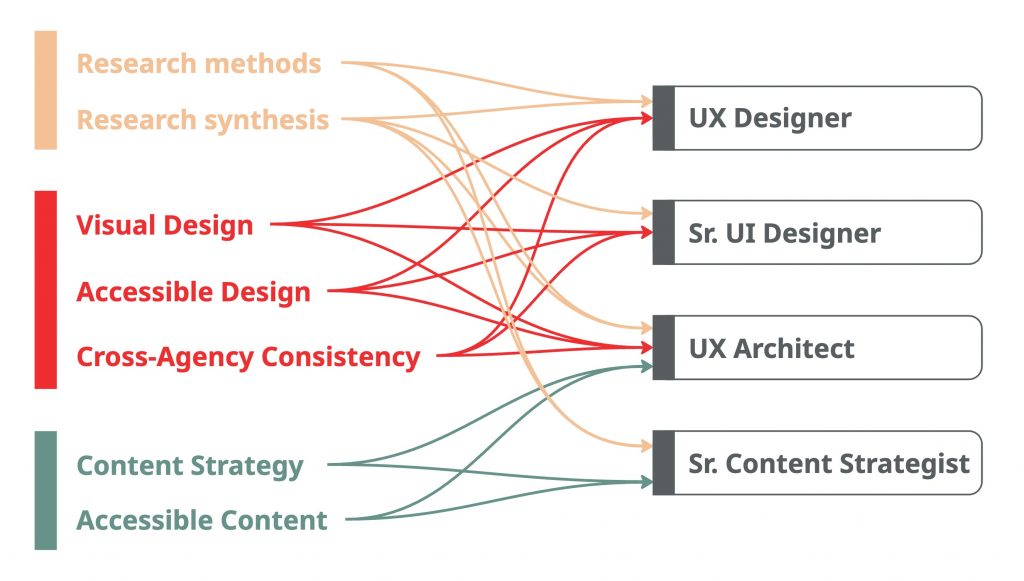
Defining Roles and Hiring the Team
Using the requirements and skills as a guide, I shaped the team we needed. I created the job descriptions and ran the interview and hiring process. The result was a strong, cross-functional group ready to deliver the modernization effort.
Building Our Foundation
Starting With the Basics
Before we could start solving FPAC’s problems, we needed the basics: computers, software, and tools.
I researched and selected the equipment and tools our team needed to get work done: MacBook Pros (Aleut’s first Mac procurements), Figma, Adobe Creative Cloud, Miro, Screaming Frog, Optimal Workshop, and Hotjar.
Defining How We Collaborate
Now that the team was physically able to start working, it was time to build the process and structures to support them.
Since we were building our DesignOps from scratch, I needed to prioritize what processes we needed immediately vs. what could wait. With a fully remote team spanning both coasts, the first thing we needed to figure out were communication norms, followed by our internal systems.
Establishing Communications Norms
- Created and administered Teams channels for every website, and one for the FPAC enterprise
- Set expectations for availability and responsiveness, especially across time zones
- Established a weekly Design team meeting with a team-curated agenda
- Started weekly 1:1 check-ins to support each team member
- Established working hours and availability windows for a fully remote team
- Clarified when to use which channels (chat, email, meetings)
- Fostered a culture of collaboration and psychological safety by modeling and encouraging respectful, constructive dialogue
Setting Up Our Internal Systems
- Created the initial SharePoint structure for the program
- Set up folders, permissions, and team access
- Established naming conventions for files and deliverables
- Created branding for internal and external deliverables, including colors, templates, and logos
- Organized spaces for research, content, design work, and shared reference materials
- Centralized all existing FPAC research and artifacts so the team wasn’t starting from scratch
- Documented where work lived so the team knew where to find and store artifacts
Establishing How We Get Work Done
Or, building a repeatable process while we’re doing the work.
We had our equipment, tools, and ways to collaborate. Next up, we had our first website to design and deliver: the Risk Management Agency (RMA). It was time to get to work, but we had no workflows, templates, or design foundation to get us started. We had to build it while delivering work for RMA.
Setting Up Our Core Workflow
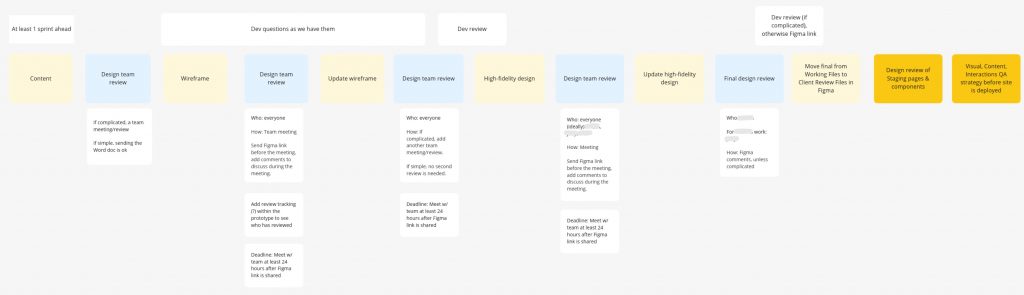
- Mapped out the full HCD sequence for the program: research, content strategy, low-fidelity design, high-fidelity design, and testing
- Defined what each phase produced and how work moved from one phase to the next
- Ensured the UX team worked at least one phase/sprint ahead of development and content migration
- Clarified how cross-functional teams engaged at each step so no one was blocked
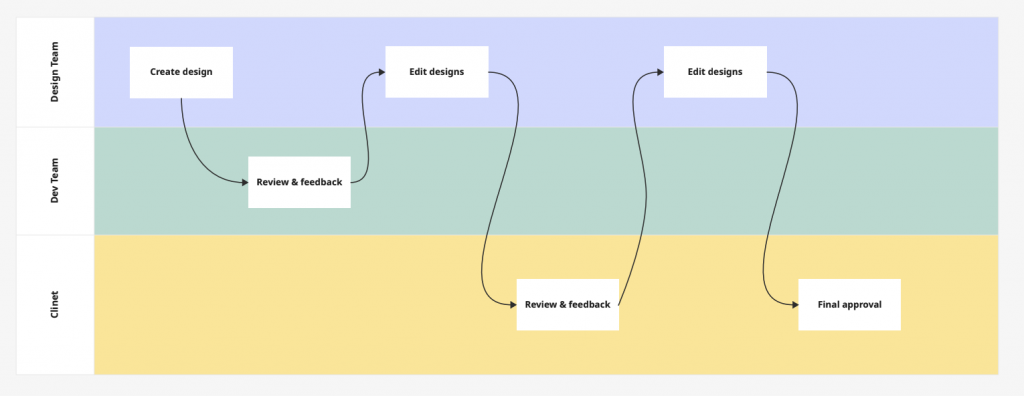
Establishing Review and Feedback Cycles
- Created clear expectations for peer review within the UX team
- Defined developer review points to confirm feasibility early
- Set up predictable client review cycles to gather feedback and approvals without disrupting the timeline
- Documented how revisions were incorporated so we didn’t backtrack or duplicate work
Creating Standards for Artifacts and Deliverables
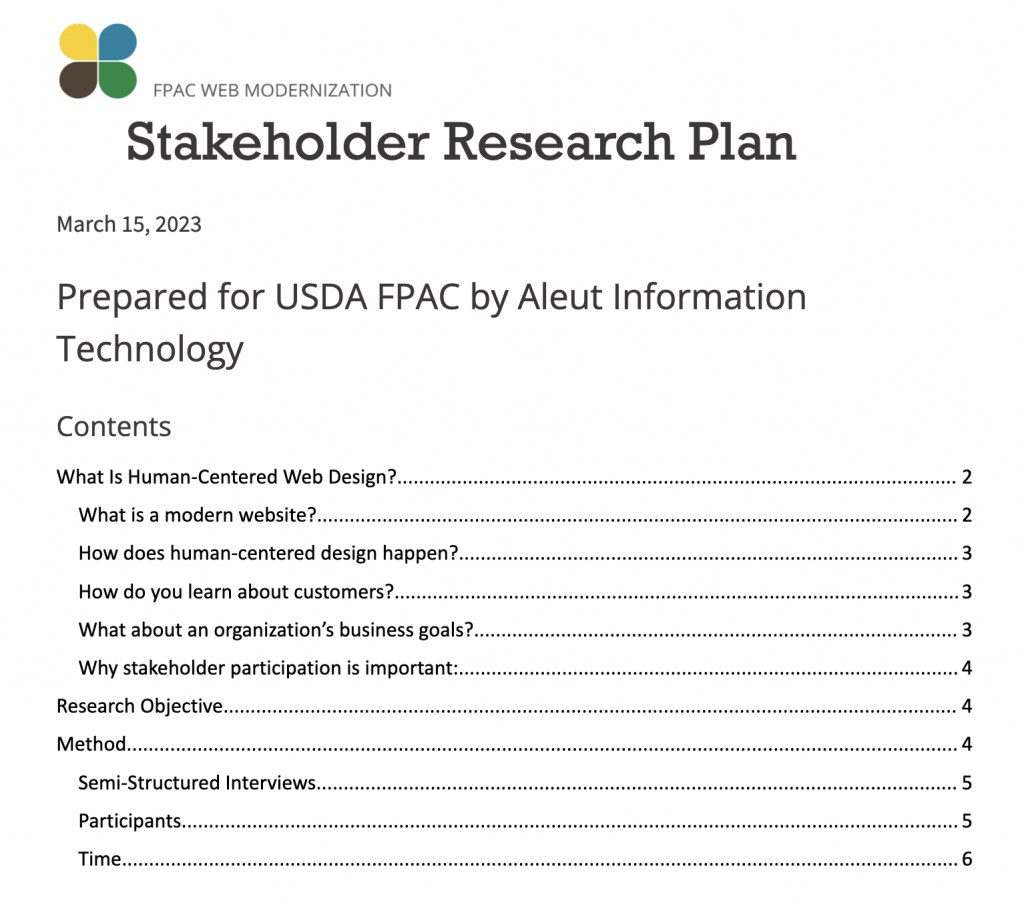
- Standardized the structure and format of our main deliverables, including research summaries, IA documentation, wireframes, prototypes, and testing plans
- Established naming conventions for files and artifacts from the start
- Created branded templates for reports, presentations, and reference documents so the team delivered work that felt unified and professional
Building Repeatable Patterns Along the Way
- Reused successful workflows, templates, and deliverable structures across all agencies
- Adjusted only where necessary, allowing us to move faster with each redesign
- Built a design system in Figma so we could move faster and keep UI patterns consistent across agencies
- Created a UX/Design team onboarding checklist using this research and artifacts to accelerate onboarding of new team members
- Kept an up-to-date list of skills and roles, in the event our team needed to welcome new member
Outcomes
Since this was a brand new DesignOps process, built from industry best practices but tailored to our program, it was essential to understand how it was working.
We focused on three key questions to measure success.
1. Were Our Process Repeatable?
We built our DesignOps foundation while delivering the RMA website, then tested and refined it during the Farm Service Agency (FSA) redesign and again during the FPAC Business Center project. With each new site, the team applied the same core workflows, standards, and review structures with only small adjustments, validating that our process could scale across agencies.
Key processes we reused:
- The full research strategy, including interview scripts, recruitment templates, and analysis methods
- Standard documentation approaches for content inventories, audits, IA, and synthesis
- Content strategy methods and deliverables
- Our end-to-end UX workflow, including stakeholder reviews and design reviews
- The visual design system in Figma, including reusable components and patterns for faster prototyping
- The overall cadence and collaboration rituals that kept the team aligned
2. Were We Working Efficiently?
Efficiency was essential due to the program’s ambitious timelines. As we moved from RMA to FSA and then to the FPAC Business Center, our workflows became faster, clearer, and more predictable.
Key Efficiency Indicators:
- We completed the FSA redesign (2nd website) nearly twice as quickly as RMA (1st website)
- We completed the FPAC BC redesign (3rd website) nearly four times as quickly as RMA (1st website)
These indicators demonstrate that our upfront investment in workflows, standards, and iterative improvements reduced time spent on process, coordination, and rework.
3. Were We Consistent Across Agencies?
A core goal of the program was creating a unified experience across FSA, RMA, NRCS, and FPAC BC. Our DesignOps foundation supported consistency in IA, visual patterns, content structure, and overall user experience across the FPAC ecosystem.
Areas of Consistency:
- Navigation clarity: Similar menu structure and language across sites made it easier for users to find information regardless of which agency site they started on
- Shared content patterns: Key pages (programs, resources, news, contacts) followed the same structure, helping users recognize where to look and what to expect
- Consistent visual design: Reusable components and a shared UI system ensured that layouts, buttons, forms, and visual hierarchy felt familiar across agencies
- Predictable interaction patterns: Common filters, forms, and interface behaviors reduced cognitive load and improved accessibility
- Aligned terminology: Program names, labels, and plain-language phrasing were standardized, reducing confusion when users moved between sites
- Unified information architecture: Similar top-level categories and page groupings helped users orient themselves even when switching between agencies
Lessons I Learned From This Work
Lesson 1: Building Structure While Delivering Is Possible, but Demanding
Creating a DesignOps foundation while actively delivering a major redesign was one of the most demanding parts of this work. The timelines were ambitious, and earning time from leadership and our client to invest in process wasn’t easy because it didn’t produce immediate deliverables.
Doing both at once required constant context switching, staying one step ahead of the team, and adapting when leadership turnover created gaps. I learned first hand how essential strong processes are, but also how much discipline and advocacy it takes to build them under pressure.
Lesson 2: Leadership Requires Letting Go and Trusting the Team
This was my first role where I wasn’t an individual contributor at all. I had to shift from doing the work myself to guiding, coaching, and delegating it. That was a steep learning curve, but also one of the most rewarding parts of the program.
I’m proud of how the team grew, supported each other, and delivered high quality work. Their skills and collaboration reinforced that investing in the right people is the foundation for any DesignOps effort.
Lesson 3: Process Maturity Is Never Finished — and New Tools Change What’s Possible
This program showed me how powerful a well-structured DesignOps process can be. As the work evolved, I also saw the opportunities we didn’t have time to explore and how emerging tools like AI could now strengthen research, synthesis, and workflow support.
If I were starting a similar program today, I would look for ways to integrate AI to help with brainstorming, analysis, and knowledge retrieval. A DesignOps system is never “done,” and that’s one of the most exciting parts of this work.